Aluminium vs stainless steel cladding
Aluminium is the everyday metal for insulation cladding. Stainless steel is there for the jobs that ask more of it. Here is how to tell which you need.
Aluminium: the everyday choice
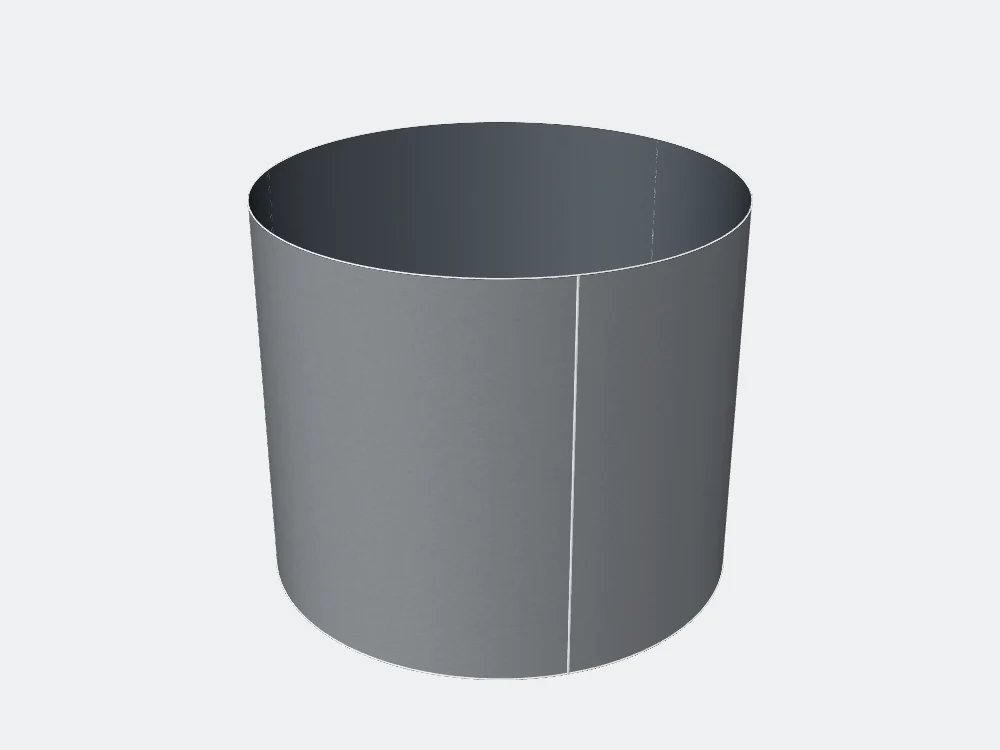
Aluminium is light, easy to roll and form, and does not rust, which is why it is the usual finish over lagged pipework and ductwork, indoors and out. It is what our line is set up for, from 100 cm coil.
- Alloy: 1050 H14 or 3003 H14, supplied to us as 100 cm wide coil.
- Thickness: 0.6 to 0.8 mm is normal, up to 1.0 mm where a heavier gauge is wanted.
- Finishes: plain (mill finish), stucco embossed, or colour-coated (PPC). Stucco in 0.6 and 0.8 mm is held in stock; mill finish and colour-coated coil are to order.
Stucco is the embossed, textured finish; plain is the smooth mill finish. The colour-coated coil is manufacturer-certified non-combustible to EN 13501-1 A1; ask for the colour card when you send the job.
Stainless steel: when the spec asks for it
Stainless steel is harder and stiffer than aluminium. It takes knocks and repeated cleaning better, and it is what many cleanroom, pharmaceutical and chemical process specifications call for. We make stainless cladding in 304 and 316, 0.5 to 0.8 mm, to order. Grade 316 resists corrosion better than 304 and is often the one written into specs for harsher conditions. If the spec names a grade, give us that grade.
Stainless is a specification choice more than a site choice. If the job documents do not ask for it, aluminium is normally the answer.
Pharma, process and non-metallic cladding
Cleanroom, pharmaceutical, chemical process and data-centre piping ask more of the cladding: heavier gauges, specified finishes, stainless and non-metallic cladding, and paperwork that stands up to procurement. As well as aluminium and stainless steel, we supply PVC cladding for that work. Our pharma and process page covers it in more detail.
What does not change
The fitting is measured the same way whatever the metal: over the lagging, outside to outside, and we add the 0.3 cm allowance. Every shape in our fitting calculators is set out the same way, from a straight pipe to a radius bend or a D box (valve box). Joints are fixed with monel or stainless pop rivets and self-tapping screws, and strapped with aluminium bands. Fixings are not in the cladding price, but we can supply them with your order: ask, and they go on your quote.
One thing we do not make is galvanised cladding: we never fabricate galvanised steel.
How to choose
- Read the specification first. If it names a material, grade or finish, that decides it.
- No spec, or a general mechanical job: aluminium, plain or stucco.
- Cleanroom, pharmaceutical or chemical process work: stainless steel, or PVC where that is specified.
- Want the cladding to match a colour scheme: colour-coated aluminium.
- Still unsure: send the job with the spec and we will tell you what we would make.
Next step
Send the sizes, a drawing, a schedule or a photo and we aim to quote the same day. Sending a job is a quote request, not an order. Rather talk it through? Ring or WhatsApp the workshop on +353 87 212 6144, Mon–Fri 07:30–17:00.
Send a job to quoteFor pharma & process · All guides · Capabilities · Lagging and jacketing explained · FAQ · Contact