What is BS 5422
If you have read an insulation specification, you have almost certainly met BS 5422. Here is what it is, in plain words, and where the cladding comes in.
The short answer
BS 5422 is the British Standard for specifying thermal insulation on pipework, ductwork, tanks, vessels and equipment. Its main job is to say how thick the insulation should be. The current edition is BS 5422 : 2023, and that is the edition we work to.
What it decides
The right insulation thickness is not one number. BS 5422 sets it out in tables that depend on a few things about the job:
- What the service is: heating, hot water, chilled water, refrigeration, process and so on.
- Why it is insulated: to save energy and limit heat loss or gain, to stop condensation forming on cold pipes and ducts, or to protect against freezing.
- The size of the pipe or duct.
- The insulation material, because some materials insulate better than others for the same thickness.
The designer or the insulation contractor reads the tables for their job and writes the thickness into the specification. We do not publish thickness tables on this site: always take the thickness from your project specification or the standard itself.
Where the cladding comes in
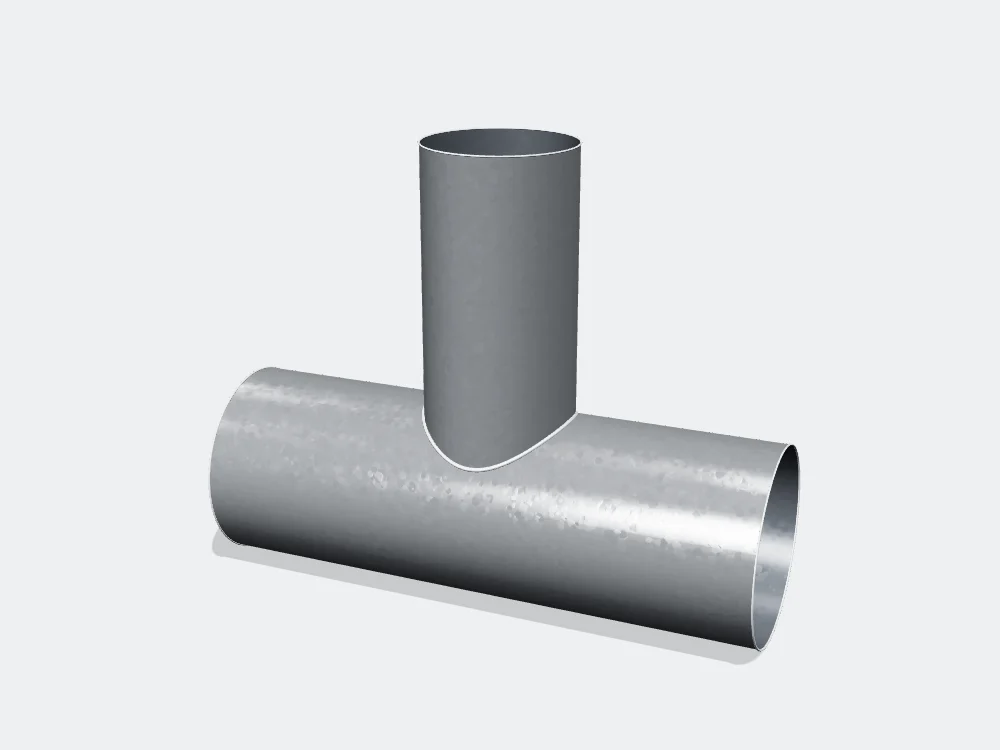
BS 5422 is about the insulation, not the metal over it. But the thickness it calls for decides the size of every piece of cladding, because cladding is measured over the lagging. A 168 mm pipe with 30 mm of insulation is a 168 × 30 section, and its casing, bends and tees are all made to fit over that.
That is why we size in insulation sections (pipe outside diameter × insulation thickness), never DN sizes. Give us the section, or the size over the lagging, and we add our 0.3 cm allowance. If the spec changes the insulation thickness, the cladding sizes change with it, so check the measurements before you send.
The spec travels with the measurement
In Site Measure, the insulation section can be picked as you measure, so the specification travels with the measurement to our workshop rather than being retyped from a separate document. Our fitting calculators work the same way: they ask for the insulation section on the pipe, such as 114 × 50. See how to measure pipe for cladding for the tape side.
Other standards you will see beside it
- BS 5970: the code of practice for insulating pipework and ductwork, including the finish over it.
- BESA DW/144: the specification for sheet metal ductwork. Our curved-back duct bends are sized by the throat, the way it sizes rectangular bends.
In short
BS 5422 tells the insulator how thick the lagging should be. The lagging decides the size of the cladding. We make the cladding to fit, working to BS 5422 : 2023. If a word on a specification is new to you, our trade terms page explains it in a line.
Next step
Send the sizes, a drawing, a schedule or a photo and we aim to quote the same day. Sending a job is a quote request, not an order. Rather talk it through? Ring or WhatsApp the workshop on +353 87 212 6144, Mon–Fri 07:30–17:00.
Send a job to quoteFor pharma & process · All guides · Lagging and jacketing explained · Capabilities · FAQ · Contact